Big money in politics
The flood of big money into political campaigns is devastating our democracy. Billions of dollars from ultra-rich individuals and corporate special interests elect politicians at the local, state and national level.
“There are two things that are important in politics. The first is money, and I can’t remember what the second one is.” Senator Mark Hanna
“We now know that government by organized money is as dangerous as government by organized mob.” President Franklin Roosevelt
“We’ve become an oligarchy, instead of a democracy.” President Jimmy Carter
“All politicians, faced incessantly with the need to raise money to fuel their campaigns, can scarcely avoid asking themselves when it comes time for them to vote, ‘How will my vote affect my fundraising and my chance to win the next election?’ They don’t ask, ‘How will my vote affect my constituents, my country, and my democracy?’” Senator Barry Goldwater
Today wealthy donors and corporate money dominate who runs for political office, who wins those elections, and the laws and policies they support and vote for when elected. The power of private money in politics undermines democracy. It enables elite campaign donors to shape legislative in their favor and deprives the majority of Americans of their right to an equal say in influencing the country’s laws and policies.
Funding elections with big private money erodes trust in government, increases political alienation, fuels economic inequality, accelerates climate change, and crafts healthcare, education, social welfare, and foreign policies to benefit the wealthy, not ordinary Americans. It destroys the promise of a government of, by and for the people.
Problems
The billions spent by candidates on their campaigns increases each election cycle.
The vast majority of campaign contributions come from wealthy individuals.
The majority of all elections are won by the biggest fundraiser.
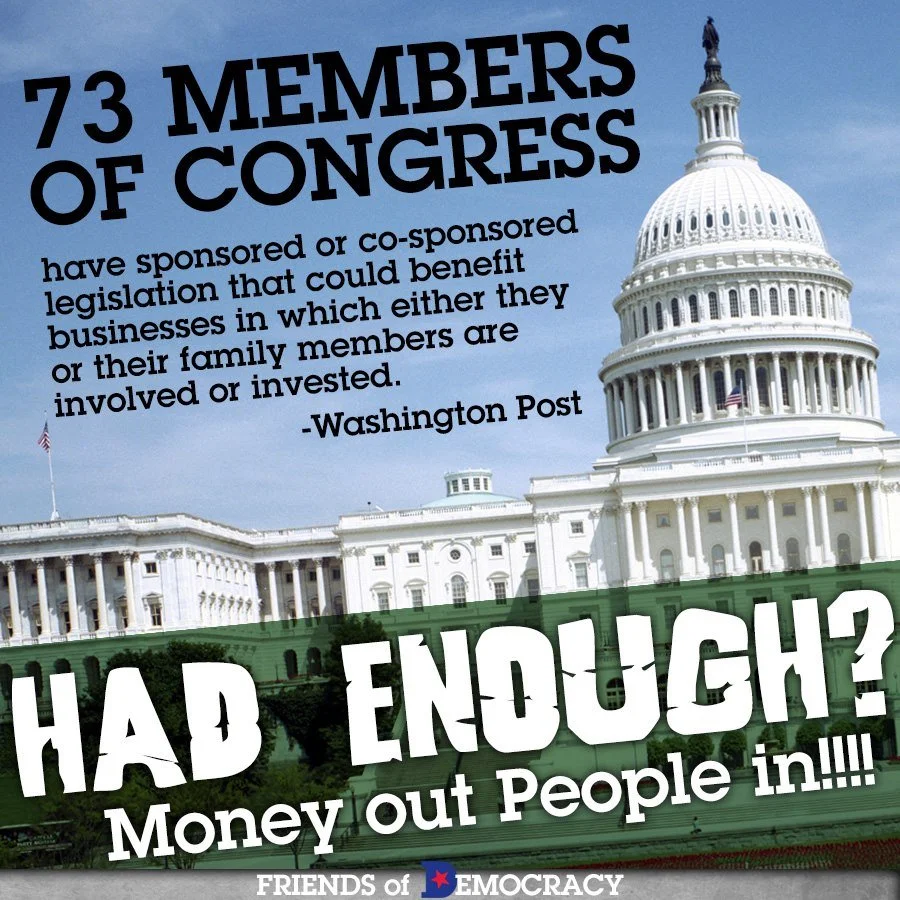
The almost complete dependence of legislators on big donors influences how they vote on issues when elected.
Fewer than 1% of American donate the vast majority of money going to campaigns.
Over 2/3 of voters say we need major changes in the way elections are financed.
Public Campaign Financing Solutions (click for info from the Brennan Center)
Public financing of election campaigns is the most effective way to curb the power of big donors.
Publicly financed candidates can run and win without depending on big donors.
Public financing for candidates’ campaigns is a option in some states, counties, and cities where candidates can qualify to receive funding for their campaigns.
Publicly financed candidates offer voters more diverse candidates and more choice.
Publicly financed candidates can spend time talking with their own constituents, not talking on the phones with wealthy individuals to beg for contributions.
A nation-wide democracy movement has won public financing options for some candidates in states like Connecticut, Hawaii,and New York; in cities like Los Angeles CA, Portland OR, and Boulder CO; and in counties in Maryland.
Monied critics of public campaign financing have loud but weak arguments. (click for an information document)
Facts about money & elections
Total cost of elections.
2004 $4.2 Billion
2016 $ 7.3 Billion
2022 $10.4 Billion
2024 $14.9 Billion
Congressional winners are almost always incumbents..
Senate
2020 83% of incumbents won re-election
2022 100% of incumbents won re-election
2024 88% of incumbents won re-election
House of Representatives
2020 94% of incumbents won re-election
2022 93% of incumbents won re-election
2024 96% of incumbents won re-election
Incumbent vs. challenger fundraising totals - 2024
Senate Incumbent $28,749,000 vs. Senate Challenger $ 5,364,000
House Incumbent $ 2,725,000 vs. House Challenger $ 417,000
Top donations from industries. 2023-4.
Real Estate, Insurance & Real estate $2.7 billion
Misc. Businesses $729 million
Electroniocs & Communication $492 million
Health $429.6 million
More information about money in politics - www.opensecrets.org